Explore our network of country and industry based websites to access localized information, product offerings, and business services across our group.
To view and access the document, you are required to sign in to your account first.
Don't have an account? Sign Up Here
Home Sodium Sulphate Price Index 2026: Natural Glauber's Salt Mining Output
Pricing Indices | 09 April 2026
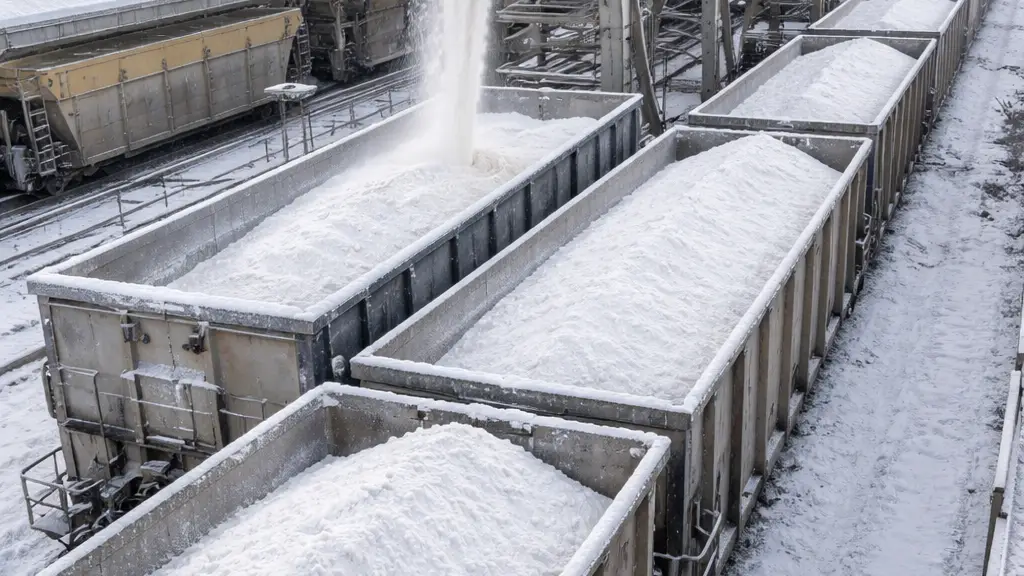
Natural-grade sodium sulphate (anhydrous, detergent quality) was trading at approximately $150–165/MT Ex-Bharuch (India domestic) in early 2026, with Northeast Asia CFR prices running approximately $560/MT as of October 2025, per IMARC Group. Natural supply from Glauber's salt mining in Saskatchewan and Spain's thenardite deposits remains the primary swing variable in global price formation. In the base case, prices in Asia face modest upward pressure through mid-2026 as Canadian winter mining constraints limit North American export availability and Chinese domestic demand begins a seasonal recovery.
| Benchmark Hub | Current Price (Approx.) | Trend vs. Q3 2025 | Source |
|---|---|---|---|
| Northeast Asia (CFR) | ~$560/MT | Stable to firm | IMARC Group, Oct 2025 |
| India Ex-Bharuch (domestic) | ~$150–165/MT | Sideways | ChemAnalyst, Q2 2025 |
| Germany (Hamburg basis) | ~$247/MT | +2.4% QoQ | ChemAnalyst, Q3 2025 |
| North America (domestic) | ~$240/MT | Softening | IMARC Group, Oct 2025 |
| Africa (CFR average) | ~$370/MT | Stable | IMARC Group, Oct 2025 |
| South America (CFR average) | ~$280/MT | Flat | IMARC Group, Oct 2025 |
Prices are approximate estimates based on available market data.
Natural-grade sodium sulphate prices entering 2026 are bifurcated sharply by origin. Northeast Asian buyers importing from China or natural-grade producers are paying a significant premium over Indian domestic buyers who benefit from proximity to synthetic production routes and lower logistics costs. The spread between India domestic (~$157/MT Ex-Bharuch) and Northeast Asia CFR (~$560/MT) reflects freight burden, quality differentiation between detergent-grade and industrial-grade product, and China's dominant role as a swing supplier in the Pacific basin.
Chinese producers, accounting for approximately 50–55% of global sodium sulphate output, continued to face weak domestic demand from the detergent and textile sectors through most of Q2 and Q3 2025, per ChemAnalyst pricing data. Oversupply and elevated inventories forced discounts through May 2025, before modest restocking in June and July provided partial support. As Chinese new year restocking cycles begin in Q1 2026, procurement desks should expect spot availability from Chinese exporters to tighten incrementally.
Natural-grade production from Saskatchewan, Canada, and Minera de Santa Marta and Grupo Industrial Crimidesa in Spain operates on seasonal cycles that are fundamentally constrained by weather. Saskatchewan's alkaline brine lakes, the source of Glauber's salt (mirabilite, Na₂SO₄·10H₂O), require temperatures cold enough for crystallization in winter months and evaporation-driven concentration in summer. Extreme weather in either direction can disrupt both phases of the extraction cycle. In January 2026, Saskatchewan's "other minerals" production category, which includes sodium sulphate, fell by 50.8% compared to January 2025, per the Saskatchewan Ministry of Energy and Resources dashboard, signalling meaningful near-term supply tightening from one of the world's principal natural-grade production provinces.
Natural sodium sulphate is fundamentally different from synthetic material in one critical respect: its production cannot be adjusted through energy inputs alone. Glauber's salt deposits in Saskatchewan's southern alkaline lake beds, operated by Saskatchewan Mining and Minerals (SMMI), Ormiston Mining, Millar Western Industries, and SOTEC Products, require stable winter conditions for mirabilite crystallization and summer heat for brine concentration in open evaporation ponds. Saskatchewan produces approximately 6% of total world natural sodium sulphate supply and is the North American market leader for detergent-grade product, serving over 80 domestic and international customers across detergents, pulp and paper, glass, starch, and water treatment.
When abnormal winter temperatures, excess precipitation, or shortened freeze seasons disrupt crystallization windows, output drops structurally for the entire season. The 50.8% decline in Saskatchewan's combined minerals output in January 2026 is a direct indicator of this constraint. Buyers in Canada and the U.S. who rely on SMMI product without secondary supply arrangements face genuine availability risk through Q1 and Q2 2026. Unlike synthetic production, which can ramp up in response to higher prices, natural lake mining cannot compress a three-month crystallization season into six weeks.
Spain's Glauberite deposits, processed by Minera de Santa Marta and Grupo Industrial Crimidesa, supply European markets with natural anhydrous sodium sulphate through a solution-mining and crystallization process. Turkey's Alkim Alkali, operating a 120,000 tpa plant at Çayırhan near Ankara, processes solution-mined Glauberite through Glauber's salt as an intermediate purification step before crystallization to anhydrous product. These European natural producers are less weather-exposed than Canadian lake miners but face energy cost pressure from European power markets that periodically reduces output economics.
China's sodium sulphate market remained supply-long through Q2 2025, with weak demand from the textile sector (a primary consumer), subdued construction activity depressing glass demand, and low detergent export orders pressuring the domestic producers. Inner Mongolia Yuanxing Energy, Zhejiang Meibao Industrial Technology, and Xinjiang Lop Nor Potash are among the major Chinese producers with large-scale synthetic capacity derived from by-product rayon and viscose production. These plants run on a co-product economics model, meaning sodium sulphate output is linked to viscose fiber production volumes rather than price signals in the sodium sulphate market itself.
This co-product structure creates a structural oversupply risk. When viscose fiber producers operate at high utilization rates, sodium sulphate output rises regardless of sodium sulphate demand. In Q2 2025, the combination of weak detergent sector procurement and viscose-driven surplus pushed Chinese domestic prices lower. The June 2025 rebound, driven by restocking in textile dyeing operations, was modest and did not fully absorb the inventory overhang. As Q1 2026 seasonal demand recovers, Chinese producers will likely defend FOB offers to protect margins eroded through mid-2025, adding upward pressure to Asian benchmark prices.
The introduction of US reciprocal tariffs in April 2025, reaching effective rates of up to 145% on Chinese chemical imports, has materially altered the trade flow economics for sodium sulphate into North America. North America's domestic market, priced at approximately $240/MT in late 2025, has historically been partially supplemented by Chinese imports. With tariff barriers now making Chinese material uncompetitive for most US buyers, SMMI and Searles Valley Minerals (California) face elevated domestic demand precisely when Canadian winter output is constrained.
Searles Lake in California, operated by Searles Valley Minerals, produces sodium sulphate as a co-product from complex brine processing alongside borates, potash, and soda ash. This operation provides a partial natural supply backstop for western US markets, but its output is constrained by the multi-product extraction economics of the brine. It cannot rapidly increase sodium sulphate volumes independently of the other minerals in the brine. The combination of tariff-driven import substitution demand and weather-constrained Canadian supply creates a genuine tightness risk in North American natural-grade sodium sulphate through mid-2026.
North America: Tightening. Natural-grade supply from Saskatchewan is down sharply in January 2026 against the prior year. US tariff barriers have closed the Chinese import route. Domestic production from Saskatchewan and Searles Valley Minerals is the primary available supply. Buyers without term contracts or secondary European supply arrangements are exposed to spot market tightness through at least Q2 2026.
Europe: Balanced with mild upward bias. Germany's Hamburg-basis price rose approximately 2.4% quarter-on-quarter in Q3 2025, reflecting tightening supply pressures per ChemAnalyst data. Stable domestic production from Spanish and Turkish natural producers and German synthetic output from the viscose industry has maintained reasonable balance. Energy costs in European power markets remain elevated compared to pre-2021 levels, creating a higher cost floor for synthetic producers. Further energy price escalation in Q2 2026 would push the cost floor higher and provide support for European prices above $250/MT Hamburg.
Asia: Structurally oversupplied from synthetic sources, but tightening at the margins. The Chinese domestic market remains long on synthetic material, but export pricing has firmed from Q2 2025 lows. Indian market prices in Q4 2024 saw a rebound in November and December driven by seasonal water treatment and detergent demand, closing Q4 at approximately $157/MT Ex-Bharuch. The Indian market's dependence on Chinese CFR imports for price benchmarking means any sustained Chinese FOB price increase, whether from improved domestic demand or reduced export discounting, will flow through to Indian landed cost within one to two contract cycles.
Base Case: Modest price firming in natural-grade markets, flat-to-soft in China-dominated synthetic markets.
Natural-grade prices in North America and for buyers sourcing from Saskatchewan or Spain face the highest risk of upward movement through H1 2026, driven by weather-constrained output and tariff-driven demand displacement. European natural-grade prices are likely to firm modestly, following energy cost pressure and the Hamburg benchmark's upward trajectory. Asian prices face a more complex dynamic: Chinese domestic synthetic oversupply limits the ceiling, but restocking cycles and firming FOB export offers could push CFR Southeast Asia prices 5–8% above Q3 2025 levels by Q3 2026.
Upside Risk: Severe weather disruption to Canadian lake mining windows. Saskatchewan's brine lake operations require specific temperature ranges for both crystallization (winter) and evaporation concentration (summer). A shortened or disrupted crystallization season in winter 2025/2026, evidenced by the 50.8% production decline in January 2026, could extend tightness into the summer evaporation season. If summer 2026 temperatures in southern Saskatchewan are below historical averages, evaporation pond concentration rates fall, reducing the mineral available for the next winter crystallization cycle. A two-season compounding disruption could push North American natural-grade sodium sulphate prices 15–25% above current levels, with European buyers absorbing some of the supply gap.
Downside Risk: Chinese export volumes surge as domestic demand remains weak. If Chinese viscose fiber output remains high and domestic detergent and glass sector demand fails to recover through H1 2026, Chinese producers may accelerate export discounting to clear inventory, particularly into South and Southeast Asia. A return to the aggressive discount pricing seen in October 2024, when Indian prices fell on lower-cost Chinese imports, would put ceiling pressure on Asian prices and limit any FOB recovery. North American prices would remain insulated by tariff barriers but would not be immune if Canadian natural-grade supply recovers faster than expected.
For North American buyers: Lock in term contracts with SMMI or Searles Valley Minerals now for Q2 and Q3 2026 volumes. The combination of weather-constrained Canadian output and tariff-excluded Chinese supply leaves spot market exposure meaningfully higher than in prior years. Buyers currently on annual term contracts should confirm allocation quantities and assess force majeure clauses with their suppliers before the Q2 buying window opens. If SMMI's facility upgrade, targeted for completion by end of 2025, has ramped to planned capacity, some relief may emerge in Q3, but buyers should not build procurement plans around an uncertified commissioning timeline.
For European buyers: Maintain term contract coverage at current levels. The Hamburg price uptrend is gradual, not acute, and spot market conditions do not yet justify forward cover at elevated premiums. Monitor Turkish and Spanish natural producer output and European synthetic plant run rates for signs of further tightening before adjusting contract coverage.
For Asian and Indian buyers: Favour spot or short-term contracts (one to three months) on Chinese material through Q1 2026 while Chinese export discounting remains a feature of the market. If Chinese FOB offers begin firming by Q2 2026, shift partially to medium-term contracts to lock in before full seasonal demand recovery adds upward momentum.
Natural Glauber's salt mining output is the underappreciated swing factor in 2026 sodium sulphate pricing. Synthetic routes from Chinese viscose by-product dominate global volume, but natural-grade product commands quality premiums in detergent, glass, and pharmaceutical applications and cannot be substituted at speed when weather disrupts mining windows. The 50.8% production decline in Saskatchewan's minerals output in January 2026 is the most concrete current signal of near-term supply tightening for North American buyers.
Three signals to watch through 2026: (1) Saskatchewan spring brine lake evaporation rates, which determine Q4 2026 natural supply availability; (2) Chinese FOB export offers, which set the ceiling for Asian-origin material globally; (3) European power prices, which set the cost floor for synthetic sodium sulphate produced as a by-product of energy-intensive viscose fiber manufacturing.
For procurement teams sourcing natural-grade sodium sulphate for detergent or specialty applications, the risk profile in 2026 is asymmetric to the upside in North America and Europe, and manageable but monitoring-intensive in Asia.
Natural anhydrous sodium sulphate (detergent grade) was benchmarked at approximately $560/MT CFR Northeast Asia as of October 2025, per IMARC Group pricing data. European Hamburg-basis prices were approximately $247/MT in Q3 2025, per ChemAnalyst. Indian domestic prices (Ex-Bharuch) ranged from $150–165/MT through early 2026. North American domestic prices sat near $240/MT. Regional spreads reflect freight costs, quality differentiation between natural and synthetic grades, and trade policy barriers affecting Chinese import flows into North America.
Three factors dominate current pricing: (1) Natural Glauber's salt mining output in Saskatchewan and Spain, which is constrained by seasonal weather windows and cannot be accelerated through energy inputs alone; (2) Chinese synthetic sodium sulphate export volumes, which are driven by viscose fiber co-product economics rather than sodium sulphate demand signals; (3) US tariff policy, which has effectively closed the Chinese import route for North American buyers and concentrated demand on Canadian and domestic US natural producers.
In North America and Europe, natural-grade prices are biased upward through H1 2026, supported by weather-constrained Canadian output and tariff-driven demand displacement. The primary risk to this view is a faster-than-expected commissioning of expanded Canadian capacity or a return of aggressive Chinese export discounting that pressures Asian and European prices below current levels. Asian prices face a flatter outlook, with Chinese synthetic oversupply capping the upside.
For buyers sourcing Canadian natural-grade product, Q2 (April to June) is typically when new season evaporation pond material becomes available, allowing suppliers to offer more competitive pricing before summer peak demand. For Chinese synthetic material, late Q1 and early Q2 often represent the period of maximum seasonal overhang before detergent and textile sector restocking absorbs surplus inventory.
North American buyers should strongly prefer term contracts in 2026. The combination of tariff-excluded Chinese imports and weather-constrained Canadian natural-grade supply removes the spot market liquidity that allowed opportunistic buying in prior years. European buyers can maintain a mixed approach: term contracts for baseline volume, with tactical spot buying during periods of Spanish or Turkish surplus. Asian buyers have more spot market flexibility given Chinese synthetic supply depth, but should begin building term contract coverage if Chinese FOB offers firm above Q2 2025 lows.
Natural Glauber's salt (mirabilite, Na₂SO₄·10H₂O) crystallises from brine lakes at temperatures typically below 17–18°C. In Saskatchewan's southern alkaline lakes, extraction depends on winter crystallization to produce harvestable mineral and summer evaporation to concentrate brine for the next season's crop. Extreme cold, excess snowfall, early spring thaw, or cool summer temperatures can each disrupt one phase of this annual cycle. A disrupted winter crystallization season cannot be compensated by running plant equipment harder. Saskatchewan's January 2026 production decline of 50.8% against January 2025 reflects exactly this type of weather-driven constraint, not an operational decision.
Access the complete article and discover related coverage.
We're committed to your privacy. Tradeasia uses the information you provide to us to contact you about our relevant content, products, and services. For more information, check out our privacy policy.


 English
 Indonesian
 简体字
简体字
 العربية
 Español
 Français
 Português
 日本語
日本語
 한국어
한국어
 Tiếng Việt



















