Overview
The textile industry is one of the most extensive and commercially significant manufacturing sectors in the world, supplying materials for apparel, home furnishings, industrial fabrics, technical textiles, and performance-based applications. From natural fibers such as cotton and wool to synthetic fibers such as polyester and nylon, textiles are essential to modern daily life and industrial development.
The industry is built around a long value chain that includes fiber production, spinning, weaving or knitting, dyeing, finishing, and garment or product manufacturing. Each stage requires careful material selection, process control, and chemical support to ensure the final textile meets expectations for appearance, comfort, strength, color fastness, and functional performance.
In modern manufacturing, textiles are no longer limited to fashion and household products. They are also used in automotive interiors, filtration systems, protective clothing, geotextiles, medical fabrics, and other technical applications. This broad application range continues to drive innovation in textile chemicals, sustainable fibers, water-saving processes, and advanced finishing technologies.
Natural Fibers vs Synthetic Fibers
Aspect | Natural Fibers | Synthetic Fibers |
|---|---|---|
Source | Derived from plants or animals | Produced from petrochemical or polymer-based systems |
Comfort | Often breathable and soft | Can be engineered for specific comfort properties |
Durability | Varies depending on fiber type | Often higher consistency and strength |
Processing Flexibility | Good for traditional textile applications | Highly adaptable for technical and performance uses |
Fiber Types and Textile Chemicals
The textile industry works with a wide variety of fiber types, each offering different characteristics in terms of softness, strength, absorbency, elasticity, and thermal behavior. Natural fibers such as cotton, wool, silk, and linen are widely used for comfort and traditional textile applications, while synthetic fibers such as polyester, nylon, acrylic, and spandex are valued for their strength, durability, and design flexibility. Regenerated fibers such as viscose and lyocell also play an important role as semi-synthetic alternatives.
Textile production also depends heavily on processing chemicals that improve manufacturing efficiency and final fabric performance. Pretreatment chemicals are used for desizing, scouring, bleaching, and cleaning the fabric before coloration or finishing. Dyeing auxiliaries help dyes penetrate fibers more effectively and improve shade consistency, while finishing chemicals are used to add softness, wrinkle resistance, water repellency, flame retardancy, antimicrobial properties, or dimensional stability.
The choice of fiber and chemical system must be carefully aligned with the intended end use. A fabric intended for fashion apparel may prioritize softness and appearance, while technical textiles may require abrasion resistance, thermal stability, moisture management, or protective performance. This combination of fiber science and chemical processing is what makes the textile industry highly versatile and technologically important.
Main Material and Chemical Groups
Group | Main Function | Typical Use |
|---|---|---|
Natural Fibers | Provide comfort, breathability, and traditional textile character | Apparel, home textiles, premium fabrics |
Synthetic Fibers | Deliver strength, durability, and engineered performance | Sportswear, industrial fabrics, automotive interiors |
Pretreatment Chemicals | Prepare fabrics for dyeing and finishing | Scouring, bleaching, cleaning |
Dyeing Auxiliaries | Improve dye uptake and color uniformity | Coloration and printing processes |
Finishing Chemicals | Enhance softness, protection, and special effects | Functional and performance textiles |
Textile Production Process
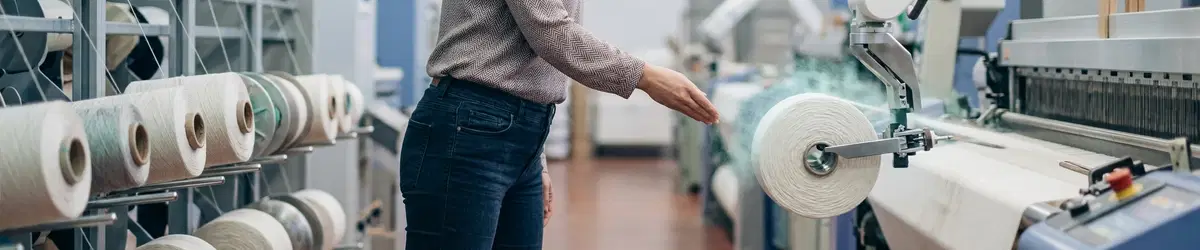
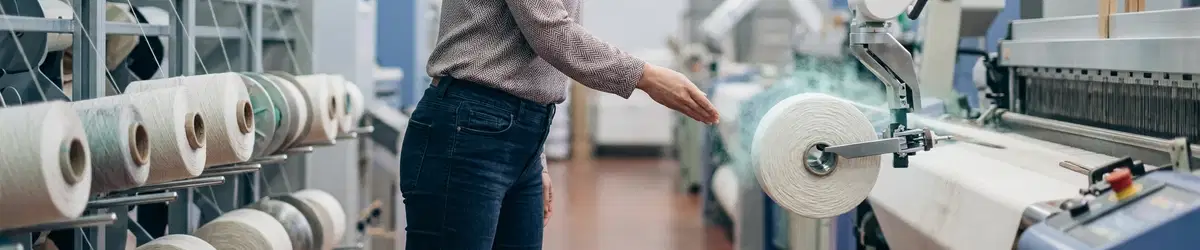
The textile production process includes several interconnected stages, each contributing to the structure, appearance, and performance of the final material. The process typically begins with fiber preparation, followed by spinning, where fibers are converted into yarn. These yarns are then transformed into fabric through weaving, knitting, or nonwoven processes, depending on the product design and intended use.
After fabric formation, wet processing stages such as pretreatment, dyeing, printing, and finishing are carried out. Pretreatment removes natural impurities, oils, waxes, and processing residues that may interfere with coloration or chemical treatment. Dyeing and printing apply color and visual effects, while finishing enhances the fabric with desired properties such as softness, wrinkle resistance, water repellency, shrink resistance, or flame retardancy.
Quality control is essential throughout textile manufacturing. Parameters such as yarn strength, dimensional stability, shade consistency, color fastness, shrinkage behavior, and surface appearance must be carefully monitored to ensure the finished textile meets customer and application requirements.
General Production Flow
Fiber preparation and selection
Spinning into yarn
Fabric formation by weaving, knitting, or nonwoven processing
Pretreatment, dyeing, printing, and finishing
Inspection, quality control, and packaging
The efficiency and consistency of these processes strongly influence production cost, fabric quality, and competitiveness in the textile market.
Applications of Textiles
Textiles are used in a wide range of sectors far beyond clothing. In apparel, textile materials are selected based on comfort, appearance, durability, and fashion requirements. In home textile applications, fabrics are used in bedding, curtains, upholstery, carpets, and towels, where softness, appearance, and ease of maintenance are important.
Technical textiles represent a major growth segment of the industry. These include automotive textiles, medical fabrics, filtration media, geotextiles, protective clothing, sports performance materials, and industrial reinforcement systems. In these applications, textiles are engineered for specific performance characteristics such as tensile strength, breathability, resistance to heat or chemicals, and barrier protection.
This broad application range reflects the adaptability of textile materials and explains why innovation in fibers, chemistry, and finishing remains central to the future of the industry.
Key Application Segments
Industry | Main Use | Key Requirement |
|---|---|---|
Apparel | Fashion and daily wear | Comfort, appearance, and durability |
Home Textiles | Bedding, curtains, upholstery | Softness and visual appeal |
Automotive | Seats, linings, interior fabrics | Strength and wear resistance |
Medical | Bandages, gowns, technical fabrics | Purity and protective performance |
Industrial and Technical | Filtration, reinforcement, protective systems | Functional and performance stability |
Safety, Handling and Storage
Proper handling and storage are important throughout textile manufacturing, especially where chemicals, dyes, powders, and treated fabrics are involved. Fibers, yarns, and fabrics should be stored in clean, controlled environments to prevent contamination, moisture damage, and unwanted variation in physical or visual quality.
In wet processing operations, workers may handle bleaching agents, alkalis, acids, dyeing chemicals, and finishing systems that require suitable personal protective equipment and ventilation. Dust control is also important in fiber preparation and spinning areas where airborne fibers or powders may accumulate. Following correct handling procedures helps protect both worker safety and process consistency.
Finished textiles should be stored under stable conditions that protect them from moisture, sunlight, dust, and mechanical damage. This is especially important for white goods, dyed fabrics, coated textiles, and products with performance finishes that may be sensitive to storage conditions.
General Handling Principles
Store fibers, yarns, and fabrics in clean and dry areas
Use appropriate PPE when handling textile chemicals and dyes
Maintain ventilation and dust control in processing areas
Follow Safety Data Sheet (SDS) guidance for all chemical systems
Storage Overview
Material Type | Recommended Storage Conditions | Main Consideration |
|---|---|---|
Fibers and Yarn | Dry, clean, and protected from contamination | Maintain processing consistency |
Dyed or Finished Fabrics | Controlled humidity and reduced sunlight exposure | Preserve color and finish quality |
Textile Chemicals | Properly labeled and safely managed storage | Maintain stability and safe handling |
Safety Handling and Storage
A Guide to Best Practices
Safety and product quality go hand-in-hand. While most basic oleochemicals—such as fatty acids, alcohols, and glycerin—are generally considered non-hazardous, following rigorous handling and storage procedures is essential to protect your team and maintain the integrity of the product.
Always Put Safety First
Before working with any oleochemical, your first step should always be to consult the Safety Data Sheet (SDS). Because oleochemicals can range from solid flakes to viscous liquids, the SDS provides the specific chemical profile, flash points, and reactive hazards necessary for a safe workspace.
Proper Handling and PPE
When working with oleochemicals, your Personal Protective Equipment (PPE) should be tailored to the product's physical form:
For Solids (Flakes/Powder): Use a dust mask to avoid inhaling airborne particles and safety glasses to prevent eye irritation.
For Liquids/Distillates: Use chemical-resistant gloves and splash goggles.
Thermal Protection: Many oleochemicals are transported or stored in a molten state; heat-resistant clothing is vital when handling materials at elevated temperatures to prevent thermal burns.
Sustainability and Innovations
The textile industry is under increasing pressure to improve environmental performance, particularly in relation to water use, chemical management, energy consumption, and waste generation. As a result, sustainability has become one of the most important drivers of innovation across the entire textile value chain.
Manufacturers are investing in water-saving dyeing systems, lower-impact finishing technologies, recycled fibers, and more responsible sourcing strategies. Polyester recycling, regenerated cellulose fibers, and bio-based alternatives are receiving growing attention as the industry seeks to reduce dependence on virgin resources. At the same time, process optimization and digital technologies are helping producers reduce waste, improve traceability, and increase production efficiency.
Innovation is also expanding in the field of functional textiles, where fabrics are engineered to deliver added value such as moisture management, antimicrobial protection, flame resistance, UV shielding, or smart-textile compatibility. The companies that can combine performance, design flexibility, and sustainability are likely to remain strongest in an increasingly competitive global textile market.